

I have been working as a Japanese web content writer and realized a harsh reality through that experience. Freelancing platforms are typically useful for freelancers seeking jobs, but Japan’s are not at all. In this article, I’m sharing an unbelievable reality for Japanese freelancers.
The current general amount of payment for freelancers on Japanese freelancing platforms

First, I would like you to take a look at the image below.
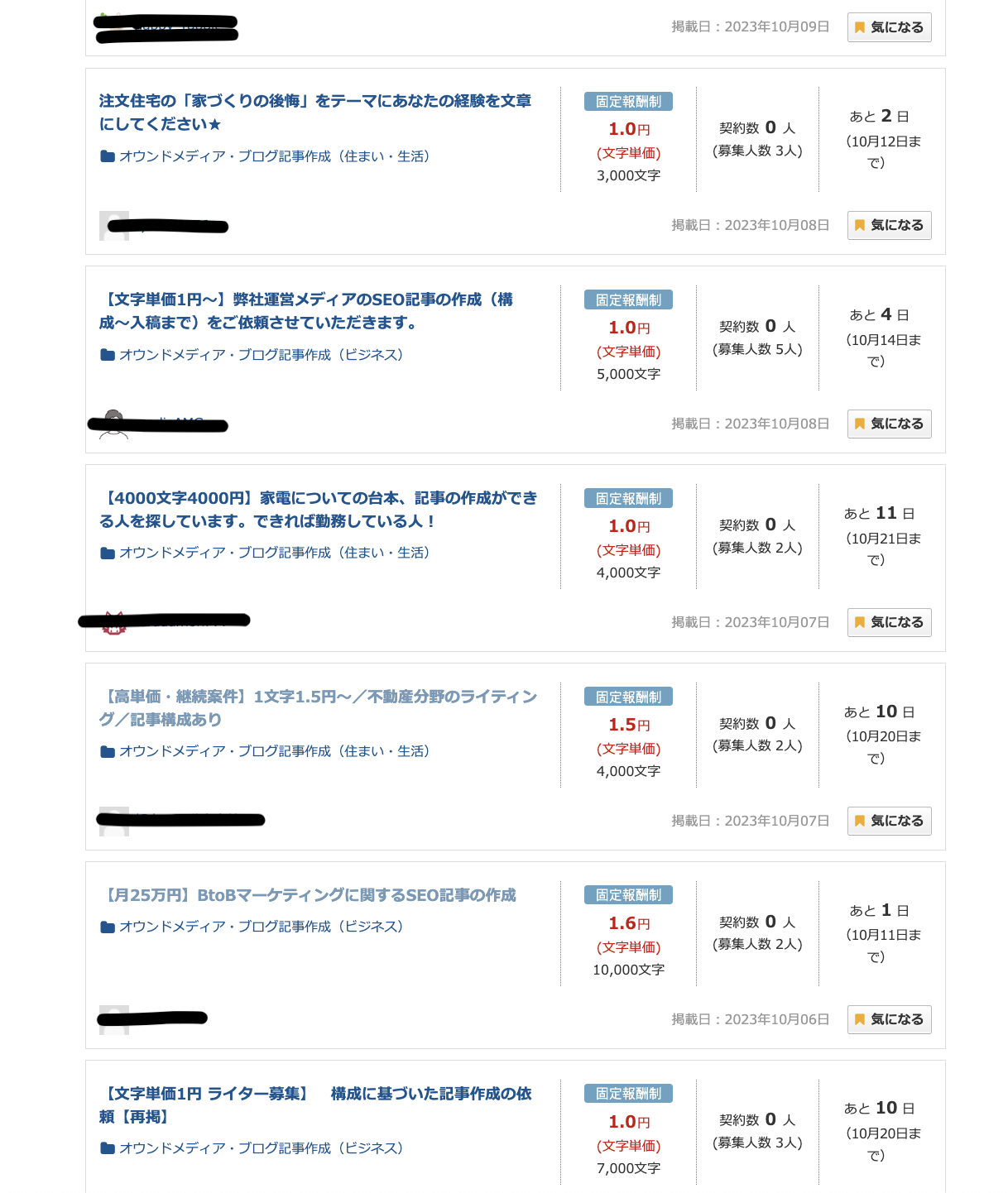
This is a freelancing platform popular among Japanese freelancers. The red numbers in the middle of the image indicate the fixed price per character for each writing job. Most of those surprisingly show as “1 JPY per character,” which is much lower pay than normal. Just to clarify, 1 JPY is currently converted to approximately $0.00625 USD.
In English-speaking countries, even beginner freelance writers get paid more than $0.05 per word. In short, Japanese freelancing platforms teem with cheaper jobs that aren’t even close to that. Yes, there are only beggars pretending to be customers.
It’s too early to be surprised. Those low-paying jobs at “1 JPY paid per character” are just a part of the whole. In fact, there are many jobs on freelancing platforms that pay much less than those mentioned. For example, the following jobs are visible.
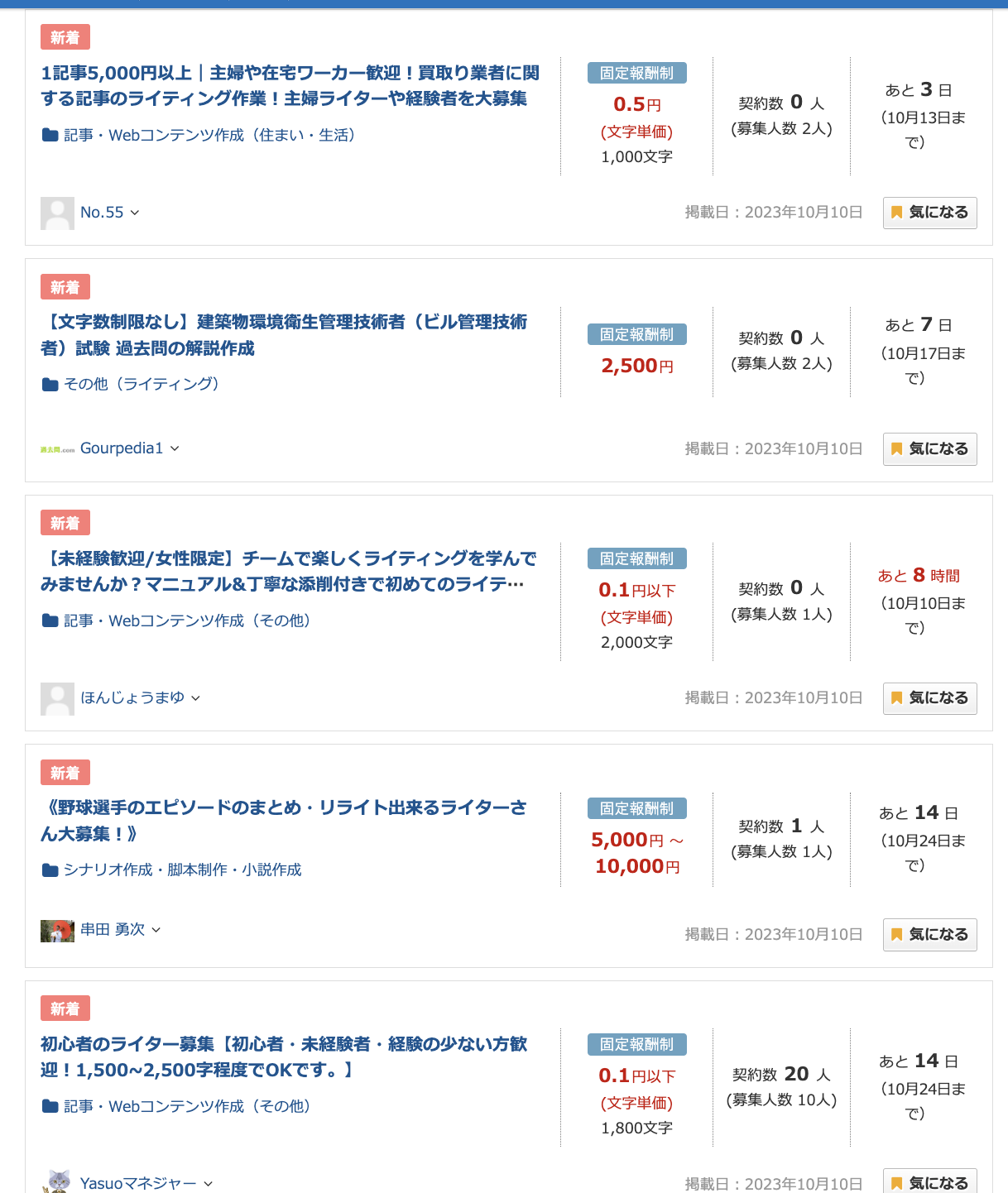
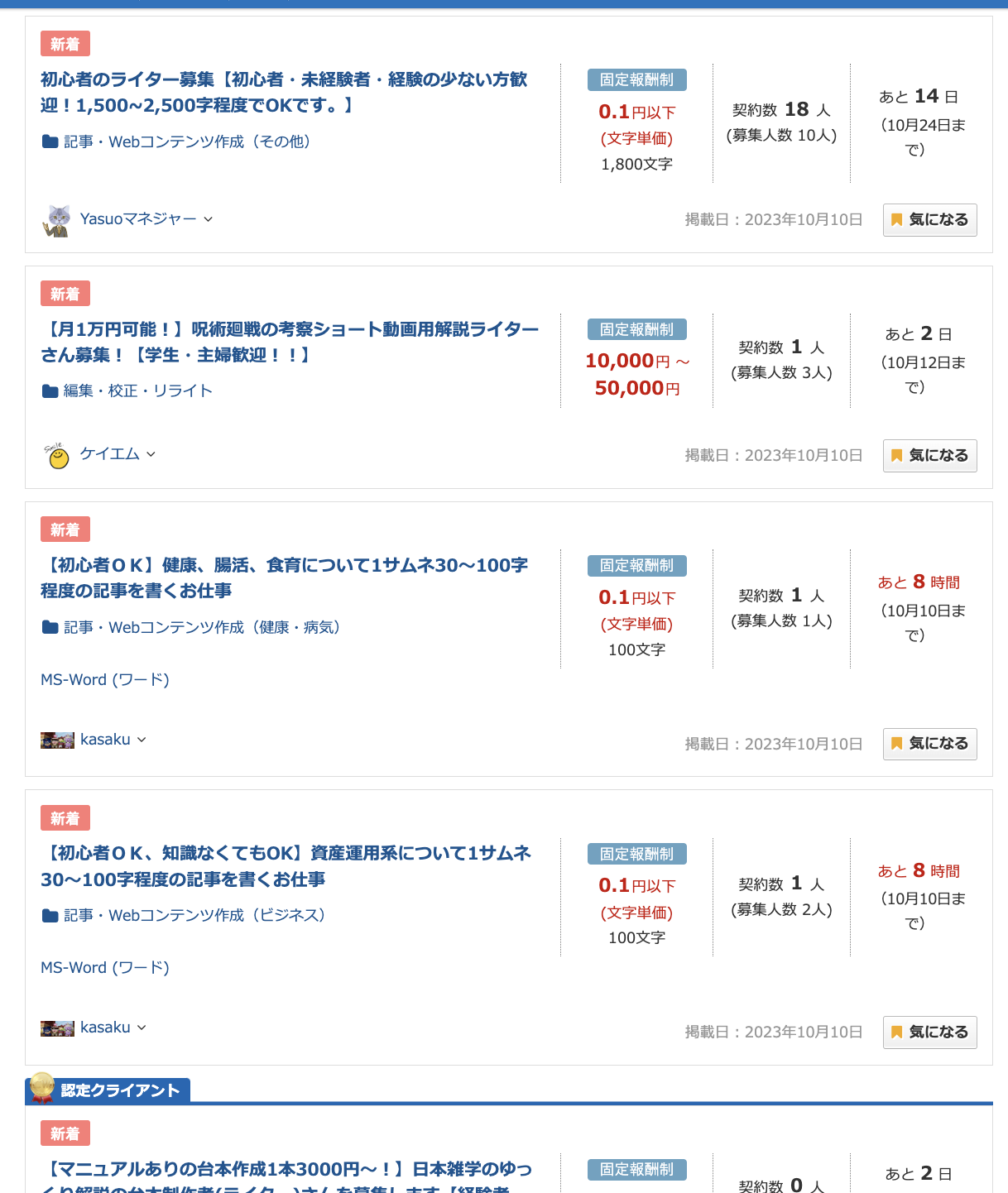
Could you notice what is happening? Surprisingly, most of the fixed prices shown are “lower than 0.1 JPY per character.” Unbelievably, they indicate less than one-tenth of what I mentioned earlier.
Of course, individuals with common sense wouldn’t apply for such terrible jobs. However, entry-level freelancers can’t understand these unfair prices, and some of them apply. Japanese freelancing platforms are barely sustained by beggars who prey on beginners now.
I can’t understand why these freelancing platforms want to survive by putting this much burden on freelancers. At least, I wouldn’t use such terrible freelancing platforms anymore. Prices for Japanese freelancers are dropping without limit due to an oversupply of inhumane jobs on them.
Maybe you all feel full, but other fraudulent jobs actually exist that plot the exploitation of labor in a more cowardly way. Those ugly jobs cheat by giving freelancers a fake assessment test and then taking their deliverables for unbelievably low pay.
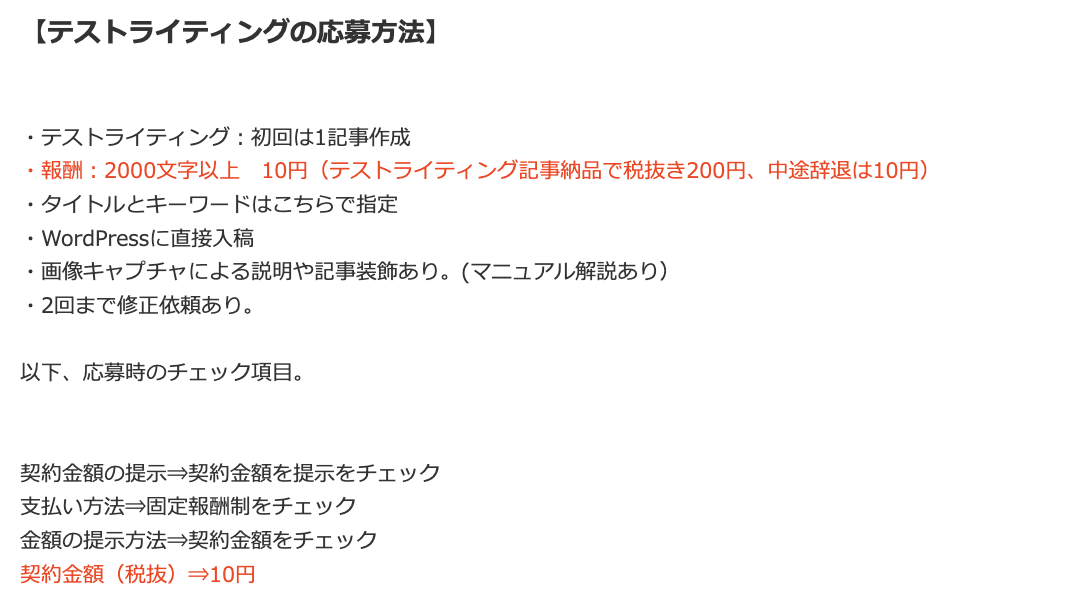
For example, the project in the above image plans to implement a pretest for freelancers to write an article (2,000 characters), and it will pay 10 JPY (0.062 USD) per article. To reiterate, it says they will be paid 10 JPY for writing a “2,000-character article,” not “a character”. I’m not sure what the per-character value is anymore.
They must be beggars, scammers, or ignoramuses on business. I assert that it is a complete mistake that such suspicious individuals can easily access the marketplace. As you can see, Japanese freelancing platforms are useless for freelancers. I sincerely hope that similar platforms in foreign countries won’t become like Japan’s.
How hard are Japanese freelance writers’ jobs?

The difference between Japanese and English writing efforts may not be very great. English writers can seemingly write 300 words per hour, including in-depth research. Japanese writers perform similarly, and they can write 300-500 characters per hour under the same conditions.
This means that Japanese freelance writers will earn between 300-500 JPY (2-3 USD) per hour if they work a job paid 1 JPY per character. Needless to say, living on this income in Japan is impossible. If it’s 0.1 JPY per character…, I don’t even want to think about it anymore.
Why have Japanese freelancing platforms become such a miserable situation?

There can be several potential reasons for this, and the following list outlines some possible causes.
Most Japanese freelancers start without knowledge and confidence
Some Japanese freelancers try to find jobs despite having no background, and they choose lower-paying jobs than usual because of a lack of confidence. However, if many freelancers adopt this approach, the average price will decline steadily. Additionally, as you know, beggars and scammers who plan to exploit labor are flooding online. This situation is extremely convenient for such scums.
Conversely, if each of them is confident enough to enter the marketplace, freelancers won’t have to apply for low-paying jobs and can avoid this terrible situation.
Japanese employers and customers basically request workers to have the same productivity and results, regardless of cost
Almost all Japanese employers and customers burden workers with excessive requirements to achieve the same results. As a result, Japanese employees are required to perform like machines rather than act spontaneously or creatively. Consequently, working in Japan is complicated, arduous, and boring. If they can expect the same results regardless of who they hire, they will seek cheaper labor next.
Japanese strict organizational culture in business
Japan has harsh hierarchical relationships. In business, employers and customers are always in higher positions than employees. People in higher positions tend to overlook those in lower positions as weak. If employees are not respected even a little, it becomes commonplace for people in higher positions to exploit them in every aspect—time, effort, money, and so on.
Because countless scammers target freelancing platforms
The huge number of online scammers in Japan is undoubtedly a key factor in this issue. Japanese online scammers generally impersonate influencers, freelancers, or companies to spread disinformation, sell useless, overpriced products, and deceive other freelancers/companies. Additionally, they often act as ghost contractors to snatch up kickbacks and destroy markets. Their numbers are rapidly increasing through an MLM or pyramid scheme. These fraud methods are actually quite similar to global scams known as “fake gurus.”
The article below explains their concrete characteristics and methods.

Conclusion

Freelancing platforms in foreign countries might also include some suspicious jobs, but I bet that only Japan tolerates so many jobs that pay remarkably low wages. And I’m sure that it’s highly unlikely that Japanese freelancing platforms will reform their system in the future.
Japan is a rare country that offers low-cost and high-quality service. However, this will never be established without labor sacrifices. Japan would quickly decline if workers recognized the unreasonable, unfair situation.


コメント