

As you have learned, AI has been in the spotlight in recent years. However, AI has also been attracting numerous scammers who cheat people in various countries. Japan is no exception; organized scammers impersonate influencers or freelancers using AI. This article discusses a Japanese online scam group that targets overseas online jobs and its negative effects on the freelance marketplace.
What kind of Japanese online scam group is it?

First, this scam group is labeled joho-shozai-ya (情報商材屋) in Japan. They have distinctive features, impersonating freelancers or influencers and selling poor-quality work and products. They possess characteristics of both fake gurus and fake online coaches known in Anglophone countries. Additionally, a visible feature is that the scam group continues to expand through an MLM scheme within their own community, such as an online salon and course. Following their concrete methods.
Japanese online scammers start by spreading disinformation on the internet to gather ignoramuses first
They first spread disinformation on social media and the internet, then target ignoramuses in each industry to expand the scam organization. The reason is simple: ignoramuses are easily tricked, exploited, and manipulated. Approaching them is completely convenient and effective for scammers intending to expand their organization. Now, let’s see how these scammers actually mislead people online.
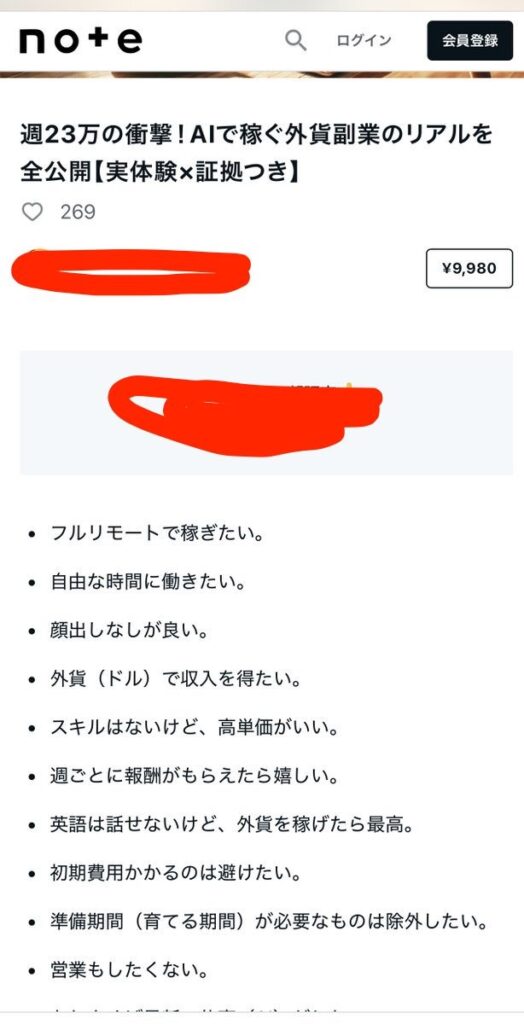
This one is the information product titled “23 ten thousand yen paid per week! Show you the reality of offshore side jobs to earn with AI! ” on a knowledge-selling platform. The bullet points in the lower part are written as follows:
・Prefer fully remote?
・Prefer flexible working time?
・Prefer to be paid in dollars?
・No skills, but prefer to make a lot of money?
・Prefer to be paid weekly?
・No English, but prefer to earn foreign currency?
In fact, if Japanese people want to earn dollars, they must have strong English skills, and using AI at work to misrepresent their abilities is generally seen as fraud. Nevertheless, this fake seller spreads disinformation as if it were fact. The most surprising point is that this fake seller is selling this complete nonsense for approximately 10,000 yen($150).
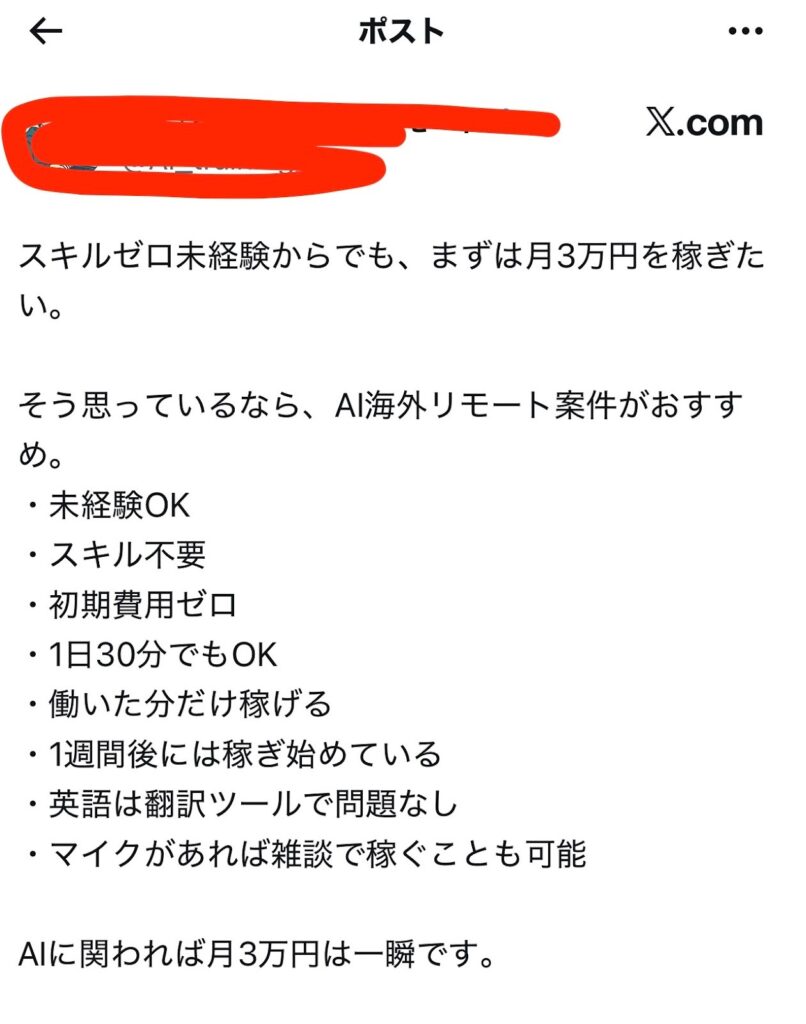
This one from social media is by a different person than the previous fake seller. However, the post content is very similar to the previous one. It shows “If you use AI, you can earn easily from overseas remote jobs even if you have no skills” at the beginning, and the bottom part is written as follows:
・No experience OK!
・No skills!
・No English! Just use AI tools!
They always emphasize that anyone can easily make money and attempt to attract ignoramuses.
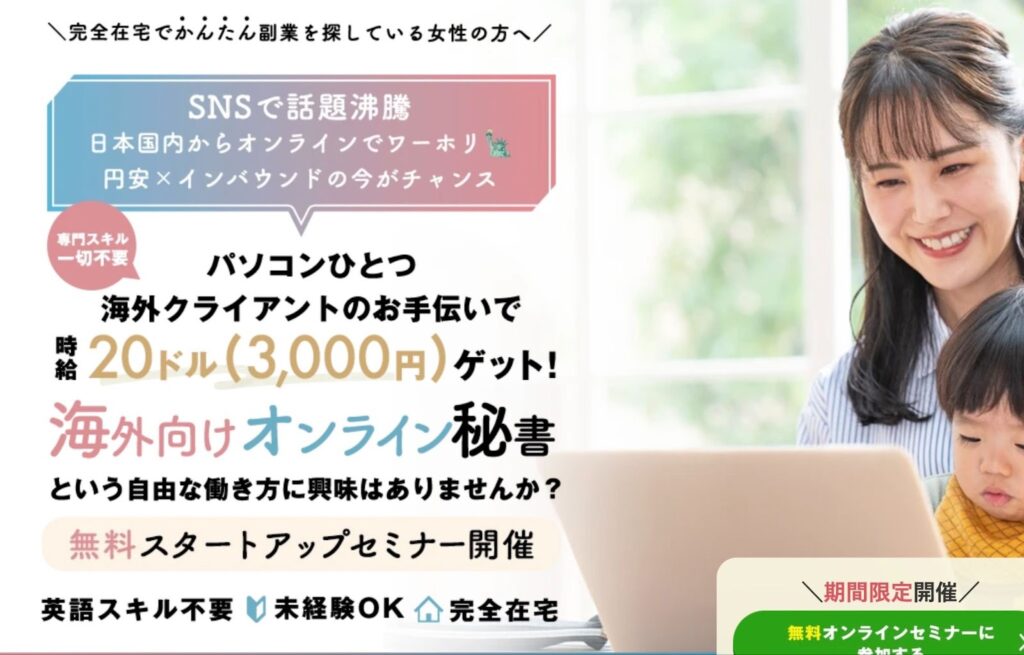
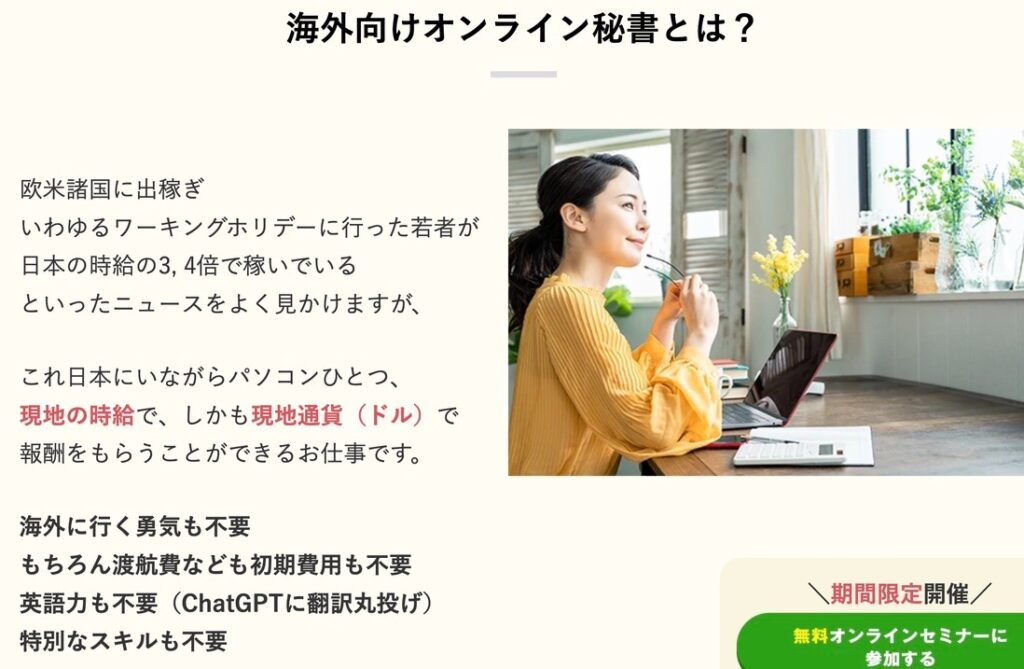
These are web pages about a virtual assistant, but they are filled with content that arouses ignoramuses’ curiosity, like the following:
・Seeking easy work from home?
・Get paid 3000 yen($20) hourly with just one PC!
・No expertise required!
・No English skills required!
・Just use ChatGPT for translation!
・Get paid in dollars instead of yen hourly!
Using AI for translation jobs is widely known as a translation scam. This means this page directly recommends that you commit fraud. Unfortunately, numerous similar webpages already exist on the internet in Japan.
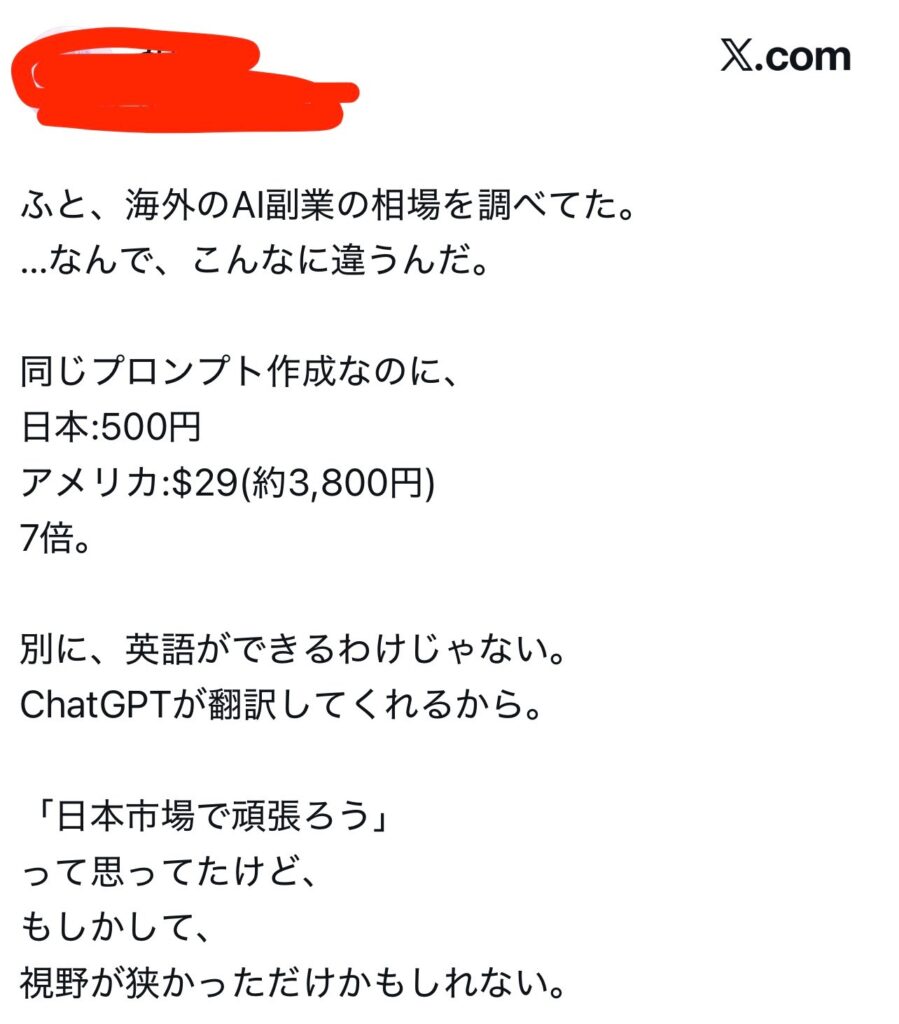
This person writes the difference between the market price of the Japanese yen (500 yen) and the US dollar ($29) for a mysterious, unfamiliar-sounding job called prompt creation. (Naturally, the latter price is intentionally manipulated to be attractive.) After that, they explain that you can translate using ChatGPT even if you have no English skills. If this person seriously considers that possible, it would be good to try it themselves, but for some reason, he chooses to lead others to do so instead.
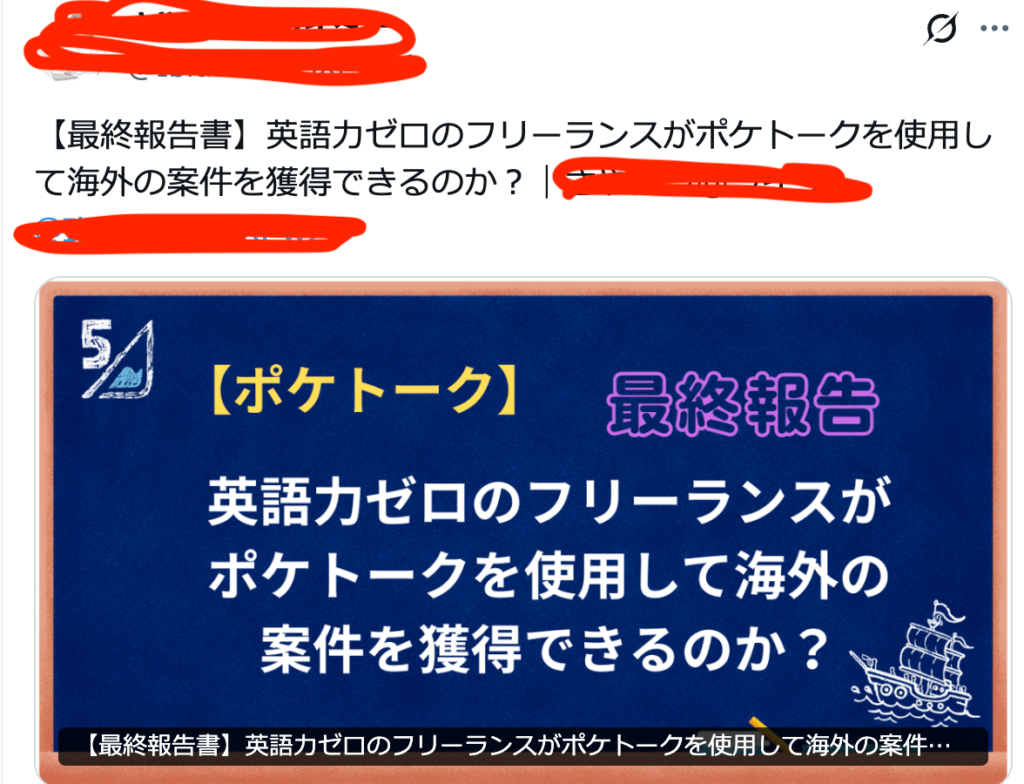
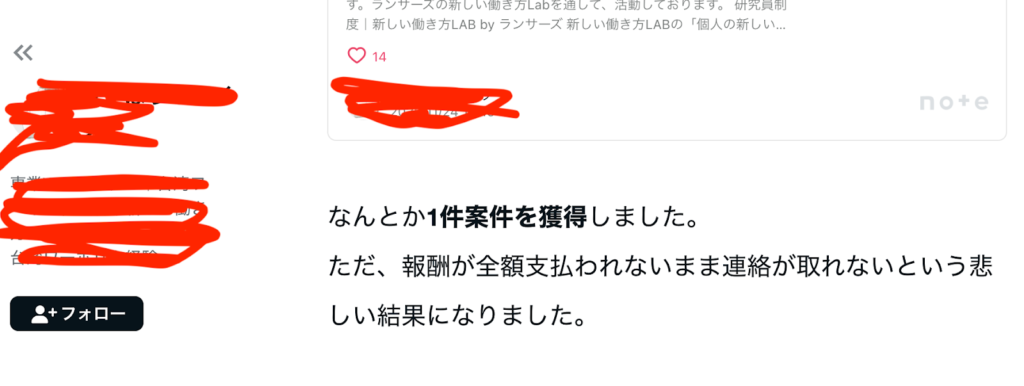
Apparently, this person is bragging about attending an interview using an AI voice. However, this practice has already become a major problem—fake applicants deceive recruiters by impersonating their abilities or identities using AI voice tools. I can no longer know whether this was done intentionally or out of ignorance. By the way, it eventually seems this person was hired, but they were paid only part of the total. I believe the client would have been generous enough, and I don’t feel any sympathy for them.
All the disinformation below, such as “anyone can make money at overseas online jobs by using AI if you have no expertise and no English skills!”, is still being spread on the Japanese internet.
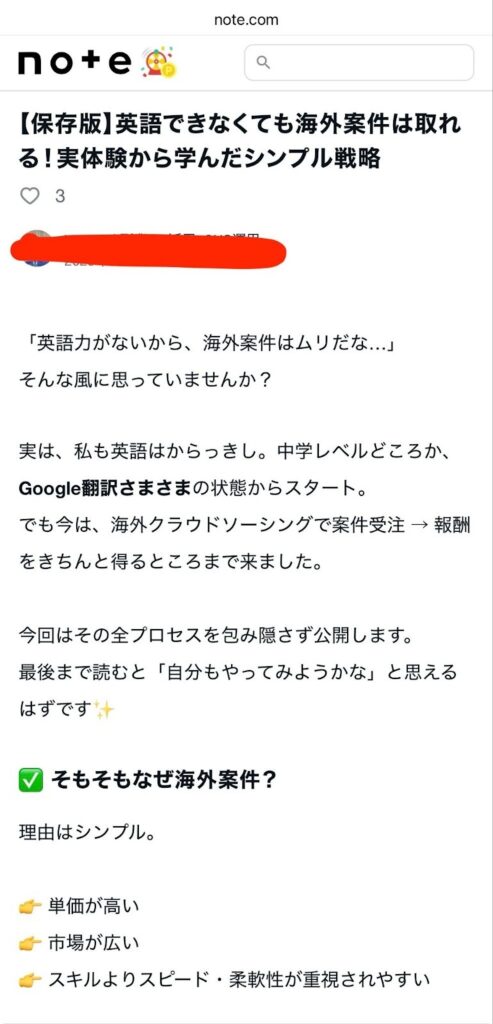
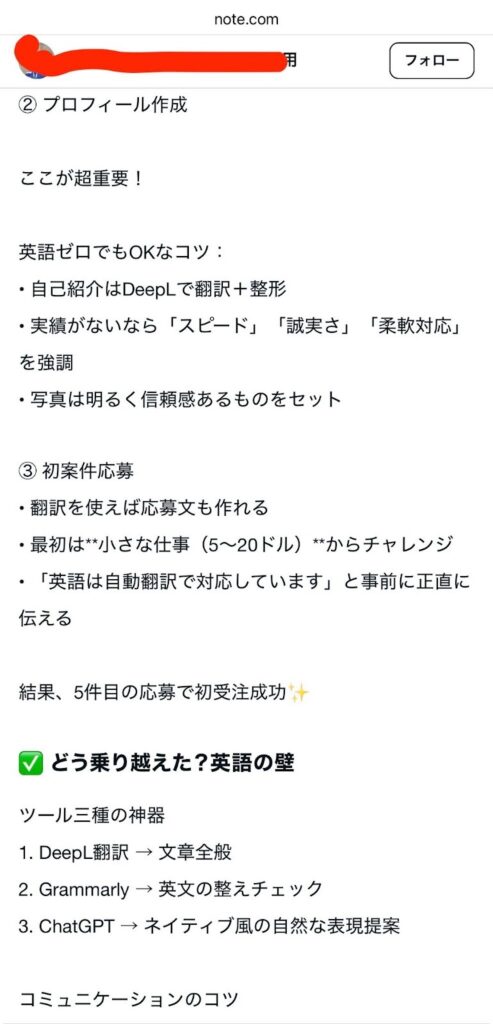
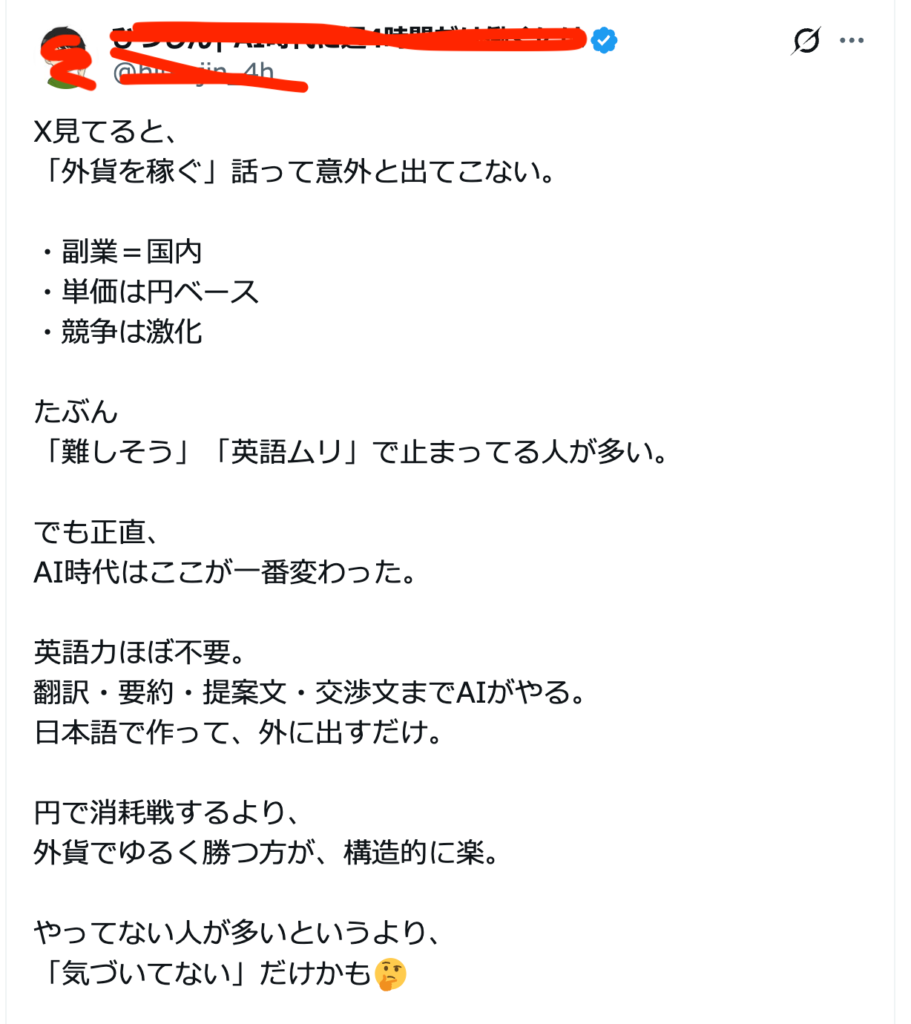
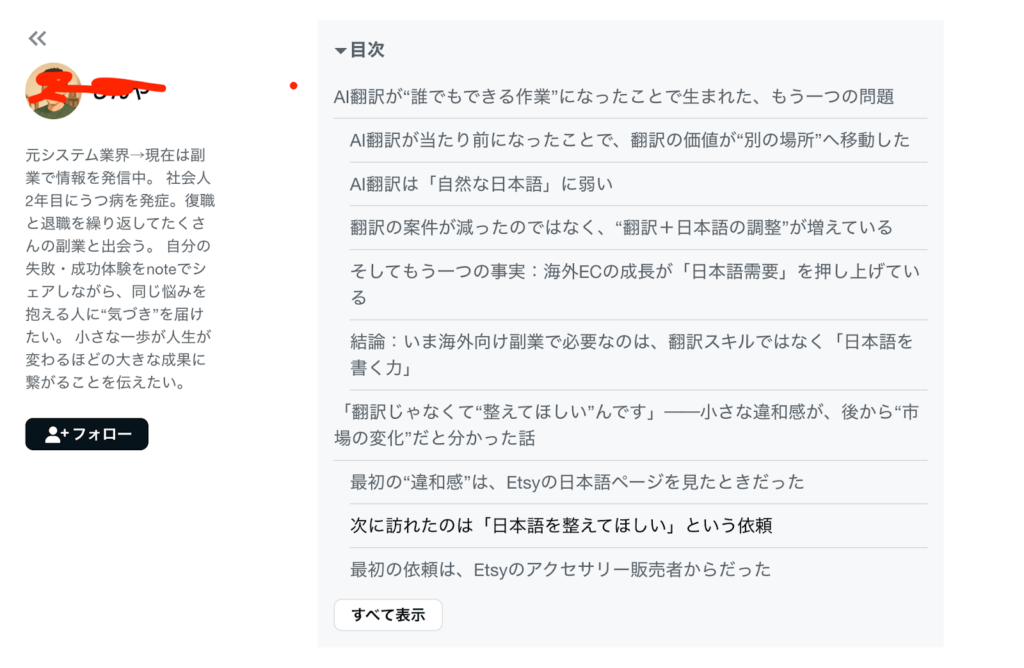
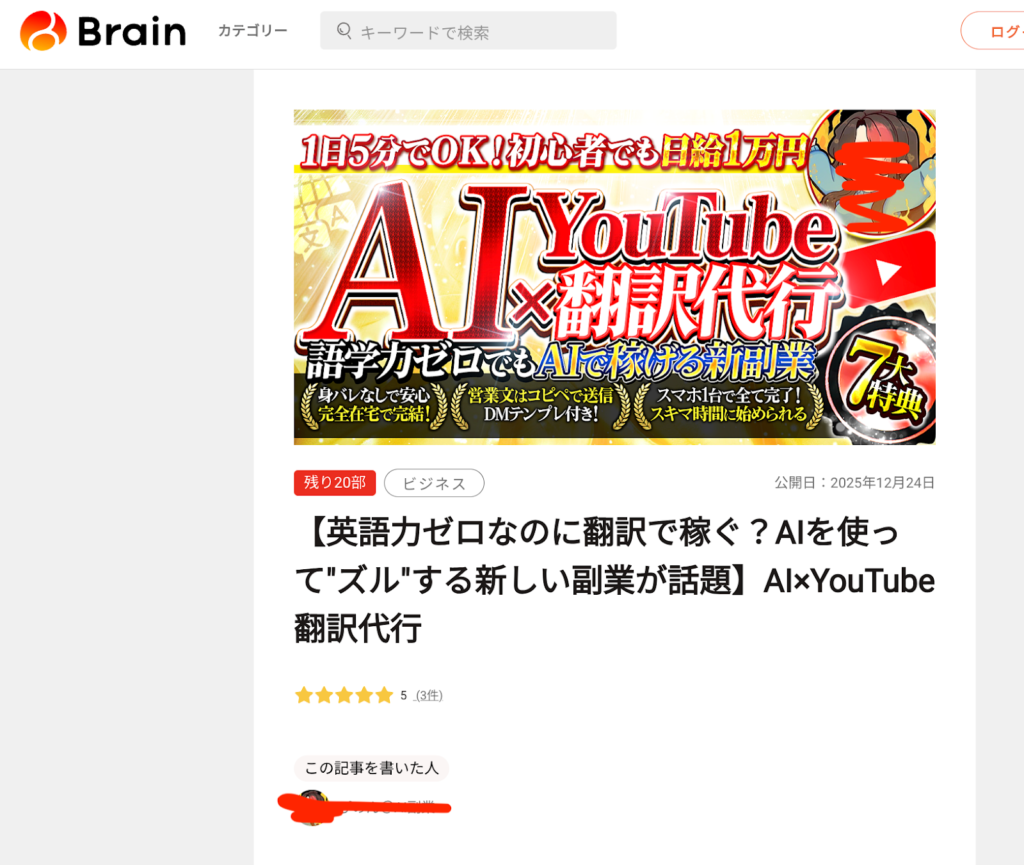
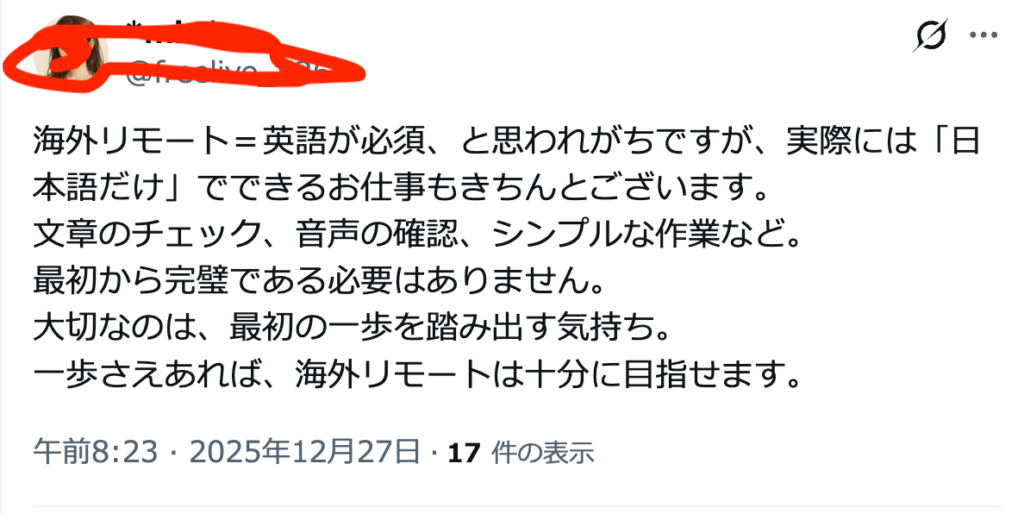
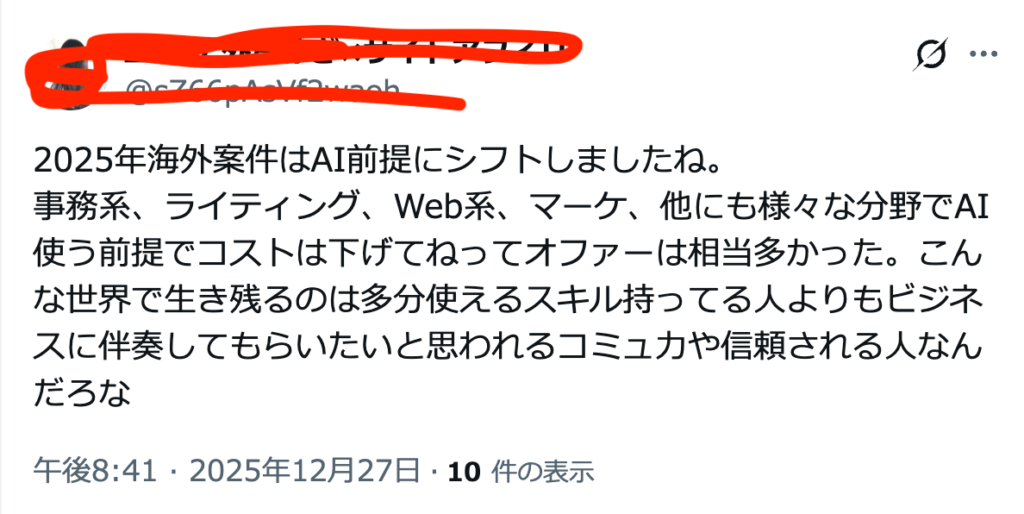
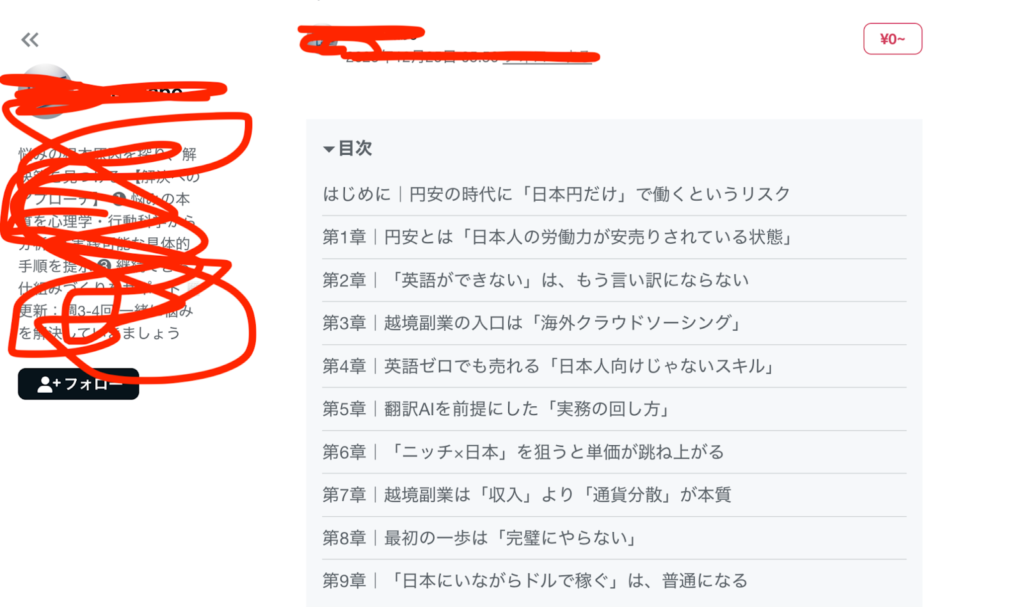
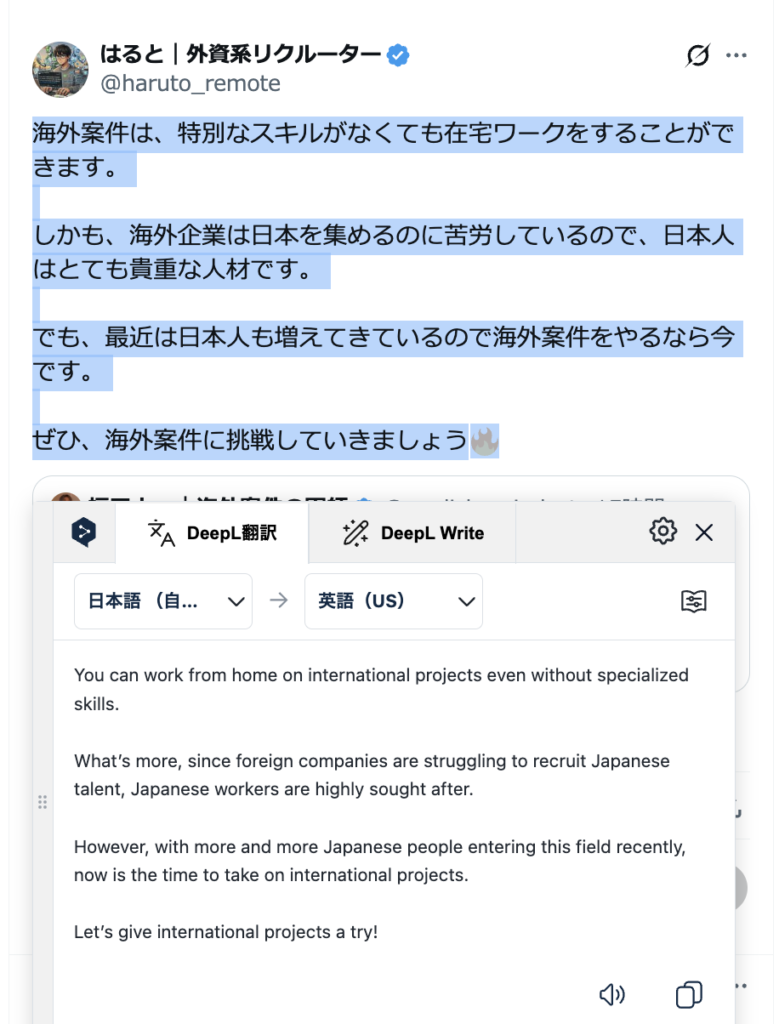
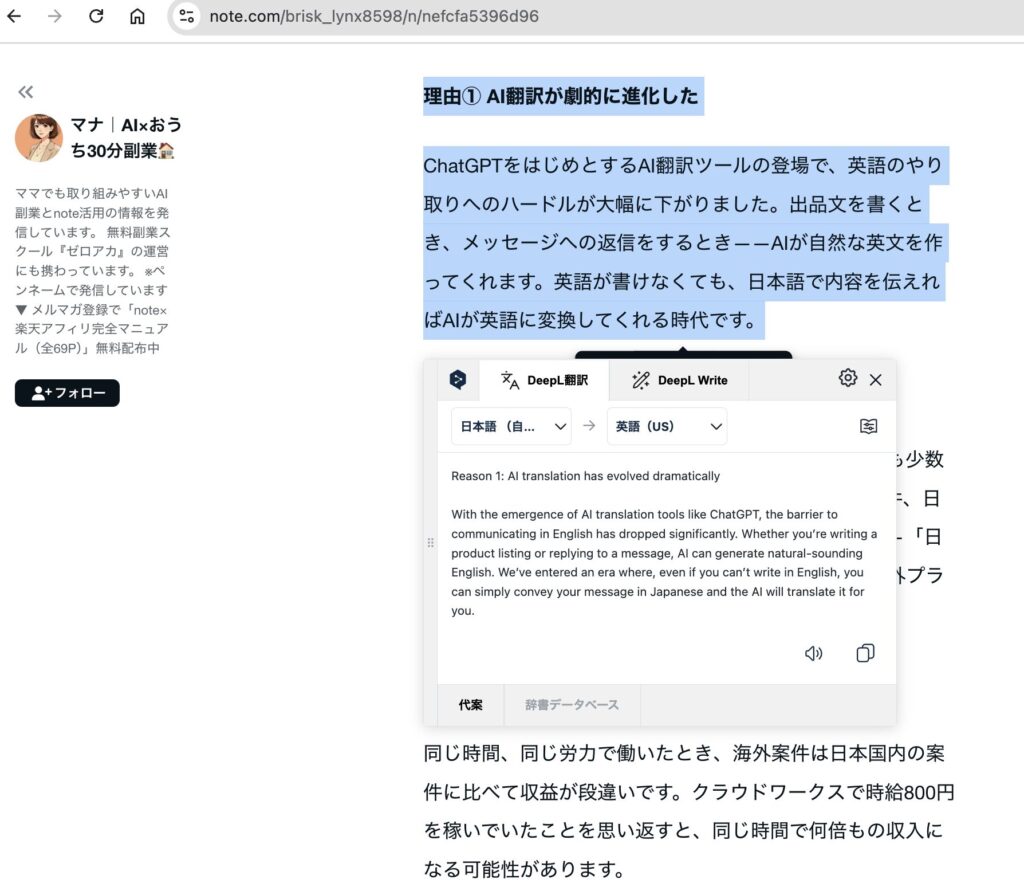
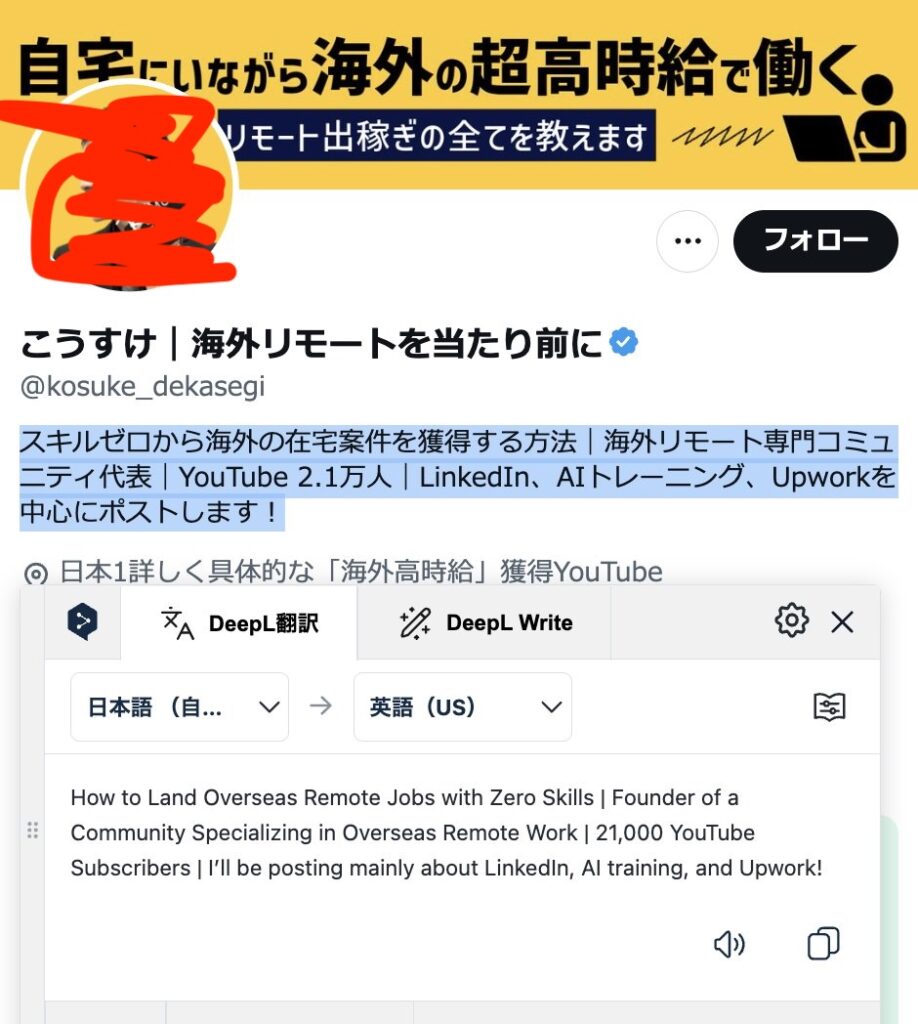
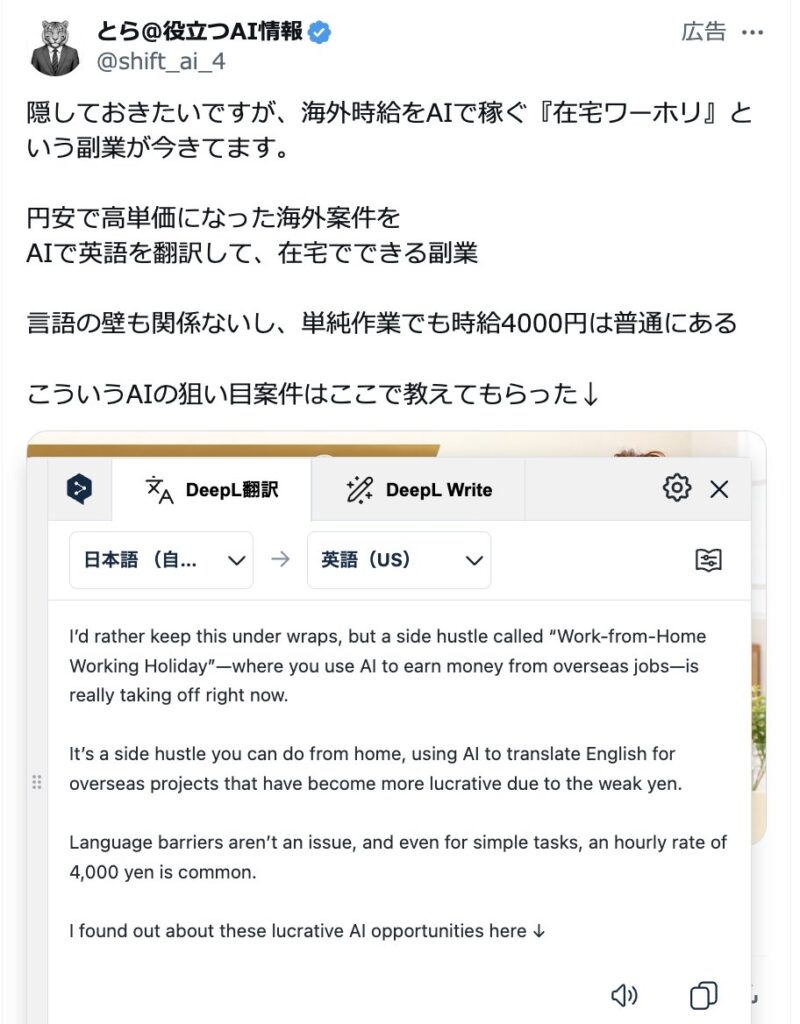
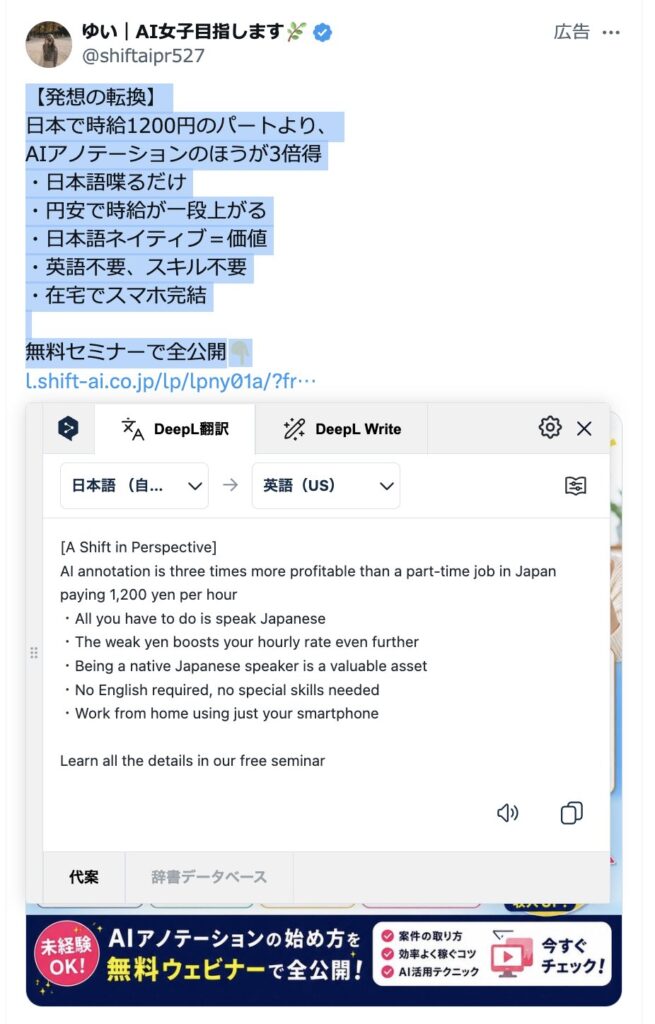
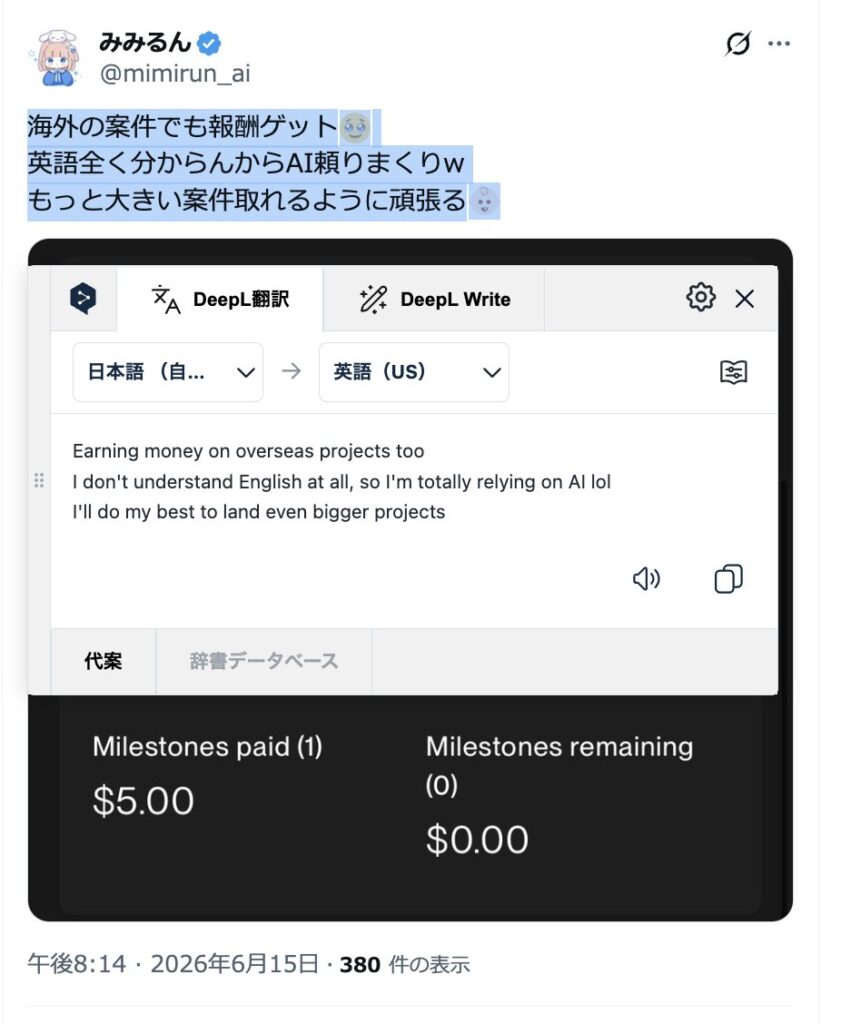
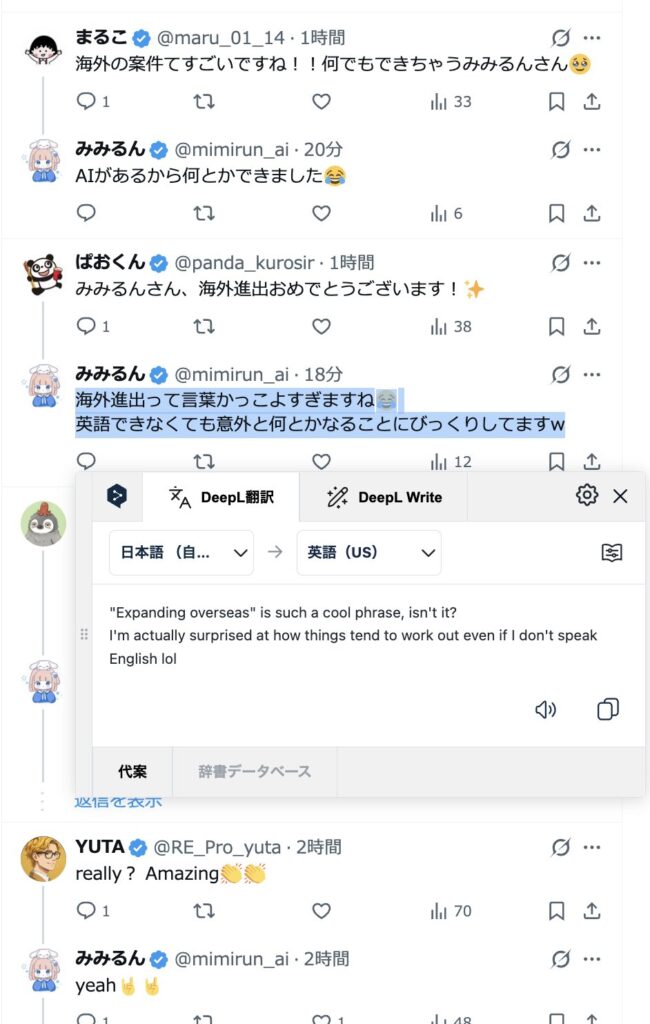
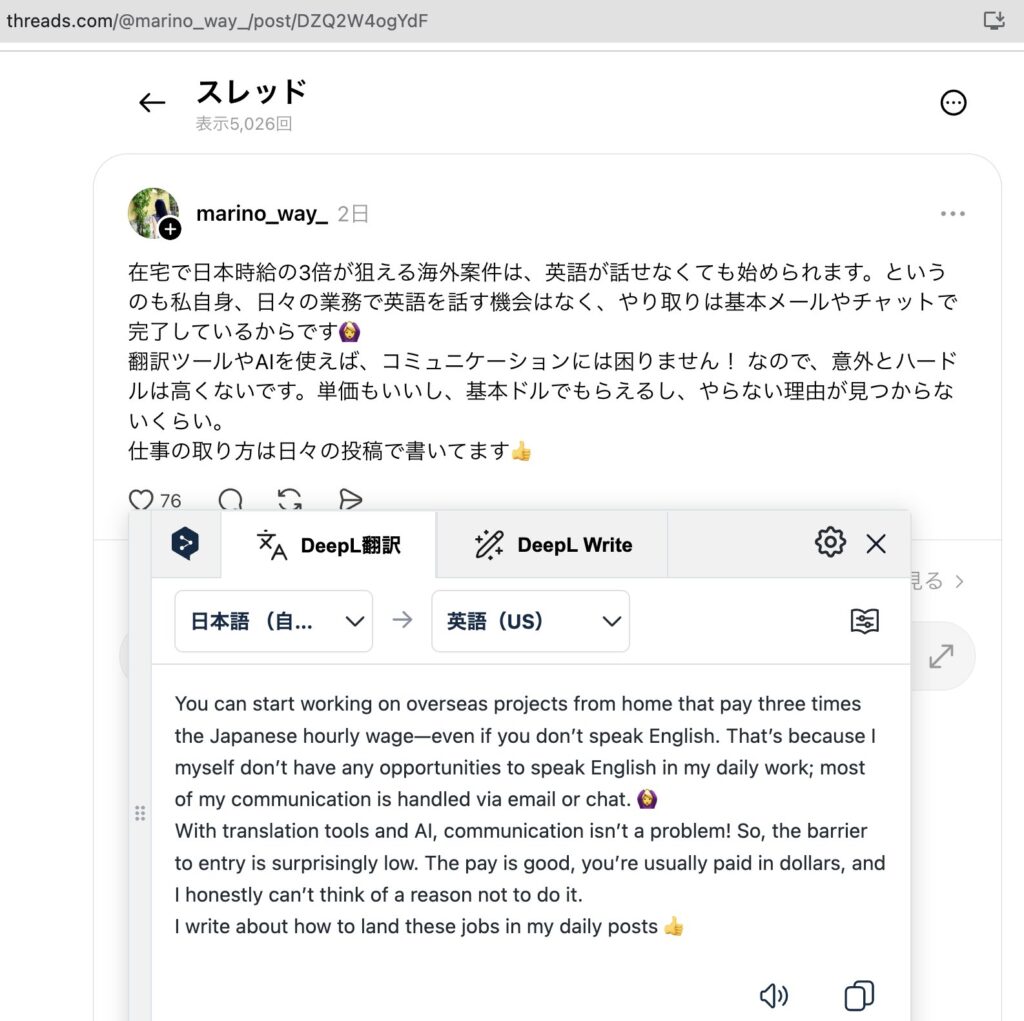
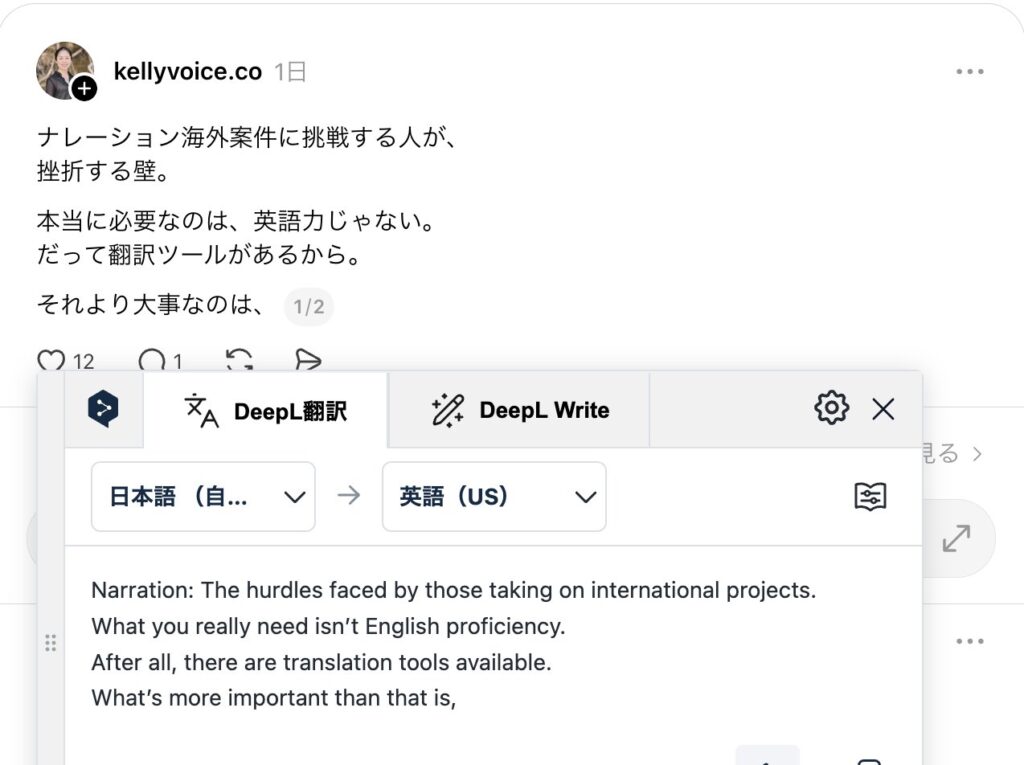
As mentioned above, the intentional spread of disinformation online is countless in number. This may be done by other individuals or by someone impersonating others. Anyway, such scammers exist organizationally and infinitely online in Japan, and they continue to contaminate everything with convenient disinformation only for their own profitsーtheir main purpose is selling useless, unreasonable, overpriced information products to ignoramuses. I insist we must exclude them if they even slightly appear because they increase instantly. Just like rat extermination.
Some of the Japanese online scammers lead freelancers as a ghost contractor
Japanese online scammers build their own communities, such as online salons or courses, and some of them become ghost contractors through them. A ghost contractor is someone who secretly subcontracts a job contracted from clients to a third party and skims off the brokerage fees. If Japanese scammers use this method, they snatch up higher brokerage fees and outsource extremely low-paying fake jobs to others on freelancing platforms. As a result, clients will receive very poor-quality achievements. With this rampant wickedness, sincere clients and freelancers suffer unreasonable disadvantages; additionally, the freelance marketplace faces serious adverse effects. In fact, Japanese freelancing platforms have already fallen into a dire situation due to scammers.

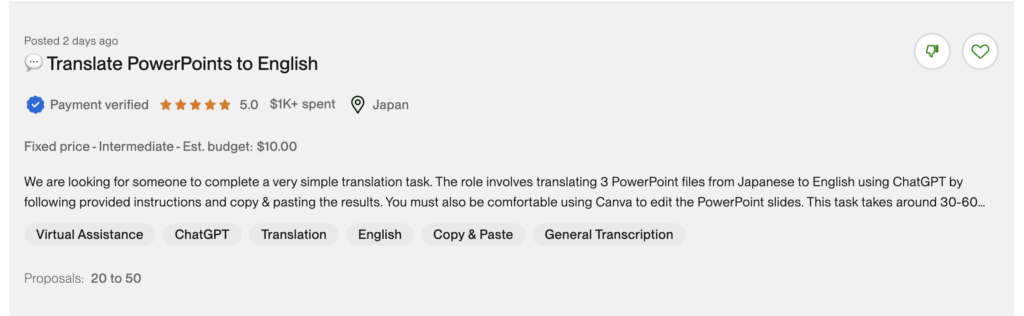
Incidentally, the horrible, low-paid jobs have already started to show up on Upwork from Japanese beggars. If this state continues, Upwork will follow the same path as Japanese crowdsourcing platforms.

Japanese online Scammers commit impression farming together with other scammers to stand out on social media
Japanese online scammers invariably have their own social media accounts. On social media, they pretend to be influencers while hiding that they are part of a scam group, approach each other as if meeting for the first time, and affirm their prejudiced opinions to spread disinformation as if it were fact. In that way, they wear fake authority and try to attract ignoramuses or business. It’s really uncomfortable watching those ignoramuses gather, resonating with fraudulent thoughts and propagating them to others gleefully, which looks just like a cult religion. Naturally, they lurk on several social media platforms, not just one. On the other hand, their accounts have one obvious characteristic: they are updated frequently in their desperation to lure ignoramuses. However, it should be noted that some scammers may diversify their accounts to avoid that suspicion.
Features of Japanese online scammers impersonating freelancers

The following are common features of Japanese online scammers on their social media accounts:
・Showing off fake, exaggerated abilities.
・Extremely enthusiastic about updating their own social media account.
・Spreading posts designed to attract ignoramuses.
・Always interact within the same group, affirm each other’s claims, and attempt impression farming.
・Frequently using the term “side hustle (副業)”.
・Having incredibly high expectations of AI.
・Spreading disinformation pretending to be an expert.
・Trying to lead someone to purchase their overpriced useless products.
・Gaining fake engagement and fake followers.
・Managing their own community and excessively encouraging someone to join it.
・Selling unhelpful disinformation products at a price higher than their worth. (Basically, this is their final goal, and their online disinformation spread is all to lead someone there.)
What negative effects can the Japanese online scammers influence?

The following is already occurring online in Japan, and these things are highly likely to happen in other languages:
・ Numerous fake influencers, fake freelancers, and ghost contractors are emerging, threatening to ruin the freelance market. (Increasing deceptive actions will undermine the credibility of other freelancers and companies, leading to fewer business opportunities.)
・Extremely low-paying jobs will continue to increase indefinitely due to a mass rise in ghost contractors.
・Disinformation will contaminate social media, all platforms, and even internet browsing. (There’s already a visible movement: Japanese fake content translated into other languages with AI tools, especially into English.)
How can we prevent Japanese online scammers from infiltrating job opportunities?

As mentioned, the characteristics of Japanese online scammers are evident on their social media accounts, so the best approach is to verify accounts and eliminate them at the application stage. If they lied about not owning social media accounts, the need arises to assess their abilities. However, it would also be easy to eliminate them even at that stage since they have no real skills other than manipulating AI. In that case, keep in mind the possibility that they use AI tools, and conduct tests that measure their original abilities and English proficiency.
Conclusion

Japanese online scammers targeting overseas jobs have already been disrupting various domestic markets. The rise in these cybercrimes may be caused by an increasing number of needies, coupled with the depreciation of the Japanese yen. This can further increase the number of such scams in Japan, which has no hope of economic improvement. Currently, many Japanese freelancing platforms have been ruined by scammers, and most online information has become untrustworthy. However, many Japanese people don’t realize it or pretend not to, and hesitate to speak out against scammers. They may assume it is unrelated to them, but eventually, such individuals’ irresponsibility leads to this dire situation. I insist that we must not overlook scammers’ fraudulent behavior because it’s too late when we witness a tragic sight.
Remember: if you see Japanese people who pretend to be experts using AI, offer or contract remarkably low-paid jobs, provide significantly low-quality work, and spread disinformation organizationally (especially attempting to attract ignoramuses), those are the Japanese online scammers.
P.S. This scam method, which targets and instigates ignoramuses, is quite similar to the fluid cybercrime organization called “Tokuryu,” which frequently causes problems in Japan. It has been pointed out that Tokuryu instigates ignoramuses to commit heinous crimes and that antisocial forces are involved in its organization. In other words, I cannot rule out the possibility that antisocial forces are involved even among the online scammers mentioned here. Please exercise extreme caution.


コメント